
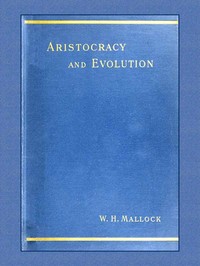
Aristocracy & Evolution by W. H. Mallock
Let's set the scene. It's the late 19th century. Ideas about democracy, socialism, and equality are gaining serious traction. Into this fray steps W.H. Mallock with a book that pushes back hard. Aristocracy & Evolution isn't a novel with characters and a plot. Think of it as a long, passionate essay—a direct challenge to the prevailing winds of his time.
The Story
There's no traditional story here. Instead, Mallock builds an argument, piece by piece. He looks at history, economics, and politics to ask one big question: what makes civilization move forward? His answer is simple but shocking to many: it's not the common will of the people. He claims progress depends entirely on a minority of gifted individuals—think inventors, brilliant leaders, and groundbreaking artists. He calls this group a 'natural aristocracy' of talent. The rest of the book is him defending this idea, arguing that social systems work best when they allow this talented few to lead and create, rather than trying to force everyone into an artificial equality.
Why You Should Read It
You should read this not because you'll agree with it (you probably won't agree with all of it!), but because it forces you to think. Mallock's ideas are like a splash of cold water. In our world that celebrates 'everyone's voice,' he makes a stark case for the power of the exceptional few. It's uncomfortable, provocative, and incredibly clarifying. Reading him feels like having a debate with a very smart, very stubborn friend from another century. It helps you understand the roots of today's arguments about CEOs, innovators, and whether true meritocracy is possible or even desirable.
Final Verdict
This book is perfect for anyone who loves a good intellectual fight. It's for history and political science readers who want to see where modern ideas about elitism and populism came from. It's also great for people who are tired of simple answers and want to engage with a complex, unfashionable argument. Fair warning: the Victorian writing style takes a page or two to get used to. But if you stick with it, you'll find a perspective that's almost entirely missing from today's conversation, and that alone makes it worth your time.
The copyright for this book has expired, making it public property. Access is open to everyone around the world.
Elizabeth Robinson
9 months agoWithout a doubt, the clarity of the writing makes this accessible. Definitely a 5-star read.
Nancy Walker
2 years agoWithout a doubt, the depth of research presented here is truly commendable. I would gladly recommend this title.
Karen Young
1 year agoA must-have for anyone studying this subject.
Joshua Ramirez
3 months agoI have to admit, the plot twists are genuinely surprising. I would gladly recommend this title.



David Moore
1 year agoComparing this to other titles in the same genre, the historical context mentioned in the early chapters is quite enlightening. I'm genuinely impressed by the quality of this digital edition.