
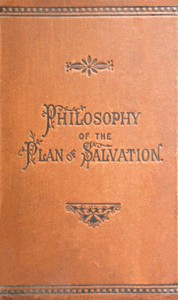
Philosophy of the Plan of Salvation: A Book for the Times by James B. Walker
Published in 1845, James B. Walker's Philosophy of the Plan of Salvation is a book with a mission. It was written for an America in the thick of the Second Great Awakening, where religious fervor met the rising tide of scientific discovery and philosophical skepticism. Walker, a minister, saw people struggling to reconcile their faith with a rapidly changing world. His goal wasn't just to tell the old story, but to defend its intellectual credibility.
The Story
There isn't a plot with characters in the usual sense. The "story" is the grand narrative of Christianity itself: the fall of humanity, the need for redemption, and the specific plan of salvation through Jesus Christ. Walker walks the reader through this narrative step-by-step. But he does it like a lawyer building a case. He presents the human need for a savior as a logical conclusion from our own moral failings and longing for something greater. He argues that the specific events of the Christian story—the incarnation, sacrifice, and resurrection—are not arbitrary myths, but the necessary and fitting pieces of a divine solution to a human problem. The book is his structured argument for why this particular plan makes the most sense.
Why You Should Read It
What grabbed me was Walker's directness. He's not hiding in abstract language. He's trying to speak to the doubter, the questioner, the person who feels left behind by pure emotional revivalism. Reading it today is a fascinating historical experience. You get to sit with the anxieties of the 1840s—many of which mirror our own questions about meaning, truth, and authority. It's a snapshot of a mind trying to use the tools of reason to support faith. You might not agree with his conclusions, but the attempt itself is compelling. It shows that the tension between belief and doubt isn't a new invention of our century.
Final Verdict
This book is perfect for history lovers, especially those interested in 19th-century American thought and religion. It's also great for anyone currently wrestling with questions of faith and reason, who wants to see how someone from a very different time tackled the same core struggle. It's not a light read, but it's a clear one. If you approach it as a historical document and a passionate intellectual defense, you'll find it surprisingly engaging. Just be ready for a one-sided conversation—Walker is definitely making his case, but he does it with a force and clarity that keeps you turning the pages.
You are viewing a work that belongs to the global public domain. It serves as a testament to our shared literary heritage.