
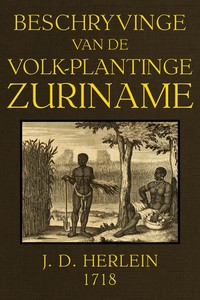
Beschryvinge van de volk-plantinge Zuriname : vertonende de opkomst dier…
Published in 1718, J.D. Herlein's Beschryvinge van de volk-plantinge Zuriname is one of the earliest comprehensive descriptions of the Dutch colony of Suriname. It's not a novel with a plot, but a detailed snapshot of a society in its messy, painful infancy.
The Story
Think of this book as a very thorough, on-the-ground report. Herlein acts as a guide, walking you through the colony he observed. He starts with the geography—the rivers, the climate, the sheer overwhelming presence of the rainforest. Then, he gets into the human part. He describes how the plantations were laid out, what crops like sugar and coffee required, and the brutal mechanics of the slave labor that made it all run. But he doesn't stop at economics. He also writes about the different groups of people living there: the Dutch colonists, the Indigenous communities, and the diverse populations of enslaved Africans. He notes their interactions, their conflicts, and their ways of life. The 'story' is the birth pangs of a colony, a record of everything from architectural styles to local wildlife, all filtered through the eyes of an 18th-century European trying to make sense of it all.
Why You Should Read It
This book is fascinating because it's so direct. There's no modern filter or hindsight. You're getting the perspective straight from the source. Reading Herlein, you feel the tension between his matter-of-fact recording of the colony's economic potential and his (sometimes startling) observations of the human cost. You see how a society rationalizes its own creation. It's not a book with heroes and villains in the traditional sense; it's a document that shows how ordinary people built a system of extraordinary cruelty, believing it was normal and necessary. That makes it a profoundly unsettling and important read. It forces you to confront history not as something that happened in the past, but as something built, day by day, by people making choices.
Final Verdict
This is not a breezy beach read. It's for the curious reader who wants to go beyond summaries and get their hands on a primary source. It's perfect for history buffs, especially those interested in colonial history, the Atlantic world, or the roots of modern Caribbean society. It's also incredibly valuable for anyone writing historical fiction or non-fiction set in this period—the details are priceless. If you're willing to sit with a challenging text and think about the uncomfortable foundations of our modern world, Herlein's account is an unforgettable window into a pivotal moment in time.
This content is free to share and distribute. You are welcome to share this with anyone.
Lisa White
2 months agoMy professor recommended this, and I see why.
Noah Perez
3 months agoI started reading out of curiosity and the pacing is just right, keeping you engaged. Thanks for sharing this review.
Elijah Martinez
2 months agoMy professor recommended this, and I see why.
Amanda Brown
10 months agoHaving read this twice, the storytelling feels authentic and emotionally grounded. I will read more from this author.


Mark Rodriguez
1 year agoJust what I was looking for.