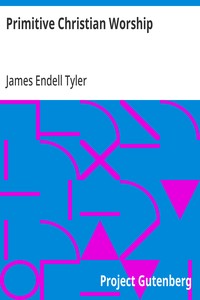
Primitive Christian Worship by James Endell Tyler
The Story
Okay, here's the deal. James Endell Tyler takes us back to the very first centuries of Christianity. Really, really early days—before popes, cathedrals, and complex rituals. His question? What did the early Christians actually do when they gathered to pray? He shows us, using their own letters and sermons, that their worship was unsettlingly simple. They sang hymns about Jesus. They broke bread thanking Him. They talked to God the Father through Jesus alone. There's no evidence—according to Tyler—that this crowd felt comfortable praying directly to Mary or any saint. He even challenges the idea of "praying to" someone who has died, period. This book walks you through that proof with the energy of a prosecutor in a courtroom. It’s not mean-spirited, just seriously insistent on getting the historical story straight.
Why You Should Read It
First of all, Tyler’s passion is infectious. Even if you're not into theology, he makes you care about a second-century hymn overheard through the ages. I felt like I was sitting through a lively coffee talk with a friendly but persistent scholar. What I loved most was the window into an argument people have been having for 2,000 years: Did the earliest Christians do what we do? The book will make you wonder about the roots of your own traditions, whatever they are. Plus, he busts the myth that that “innocent” early church was a simpler, sweeter version—he paints it as messy, growing, and full of big doctrinal questions. That history nerd inside me did a happy dance.”
Final Verdict
If you’re someone who asks hard questions about religious history, loves a careful argument, or just wants to know what your spiritual ancestors were actually thinking when they bowed their heads . . . this is for you. I’d give it 4.5 nervous cough stars for its single-minded focus. It’s like the friend who only talks about one subject—passionate but perhaps a once-a-quarter visit. Highly recommended for seekers or anyone tired of secondhand church tales.
This publication is available for unrestricted use. You do not need permission to reproduce this work.