1

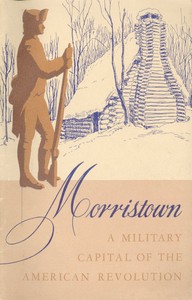
Morristown National Historical Park, a Military Capital of the American Revolution — Background and Themes
(0 User reviews)
874
Project Gutenberg
2020
Not confirmed
New Jersey -- History -- Revolution, 1775-1783; Morristown National Historical Park (N.J.)
Readers of public-domain and historical texts
Project Gutenberg digital edition
en
Edition facts
Words
17,737
Reading time
78 min
Text sections
3
The source record for Morristown National Historical Park, a Military Capital of the American Revolution — Background and Themes measures this digital text at 17,737 words, 1 hr 18 min estimated reading time, and 3 detected text sections.
The text analysis averages about 19.9 words per sentence, while the detected sections provide another way to judge how the source is divided.
Project Gutenberg metadata also associates the work with “New Jersey -- History -- Revolution, 1775-1783,” connecting these edition facts with the source record’s subject description.
Source:
Project Gutenberg record #62651
Examines the authorial choices in Weig's National Park Service handbook, focusing on diction, dialogue, and description to convey the hardships and strategic importance of Morristown as a Revolutionary War military capital.
Editorial Edition Score
4.5/5
★★★★★
★★★★★
Calculated from edition completeness, EPUB availability, text structure and catalogue metadata. Not a user rating.
How this score is calculated
- Description quality20 pts
- Title & short description10 pts
- Source metadata20 pts
- Text length15 pts
- Chapters / structure15 pts
- EPUB file integrity20 pts
Total of 100 points, scaled to a 2.5-5.0 range. Editions with an empty description or a missing EPUB file are not scored.
Edition quality
Public-domain source text
Read the source text
The source text is kept in the dedicated reader, separate from this catalogue record and its commentary.
Melvin J. Weig's handbook on Morristown National Historical Park, written with Vera B. Craig, adopts a documentary tone that blends official reportage with narrative detail. The text opens by establishing Morristown as a "military capital" through precise geographical and strategic framing, noting that the Continental Army encamped there "within sight of strong British lines at New York." This choice of diction—"within sight"—immediately conveys proximity and tension. Weig's descriptions of winter encampments emphasize material scarcity: soldiers lacked "adequate clothing" and faced "shortage of provisions and forage." The authorial voice remains detached, yet the accumulation of concrete hardships—bitter cold, hunger, disease—builds a cumulative effect. Dialogue is rare, but when present, as in Washington's communications, it is paraphrased to underscore urgency. The handbook's structure, moving chronologically through encampments, mirrors the army's own precarious timeline.
Diction of Deprivation
Weig's word choices consistently foreground scarcity and struggle. Phrases like "terrible severity of the winter" and "instability of the army" recur, but the author avoids melodrama. Instead, he relies on factual enumeration: the text lists "food and clothing shortages," "sickness and death," and "money troubles" as discrete challenges. This cataloging technique, drawn from National Park Service handbook conventions, transforms hardship into administrative data. For instance, the description of Jockey Hollow as a "log-house city" juxtaposes domestic imagery with military necessity. The author's restraint—never embellishing the suffering—makes the conditions feel more stark. When discussing the 1779-80 winter, Weig notes the "lack of adequate clothing" without elaboration, trusting the reader to infer the human cost. This lexical economy is a deliberate authorial choice, aligning with the handbook's purpose as an educational resource rather than a dramatic narrative.
Dialogue as Strategic Paraphrase
Direct quotations are sparse in this text. When Weig incorporates speech, he typically paraphrases official communications. For example, the committee at headquarters reported "the almost inextricable difficulties" of military affairs—a phrase that captures bureaucratic frustration without attributing a specific speaker. Similarly, Washington's repeated warnings to Congress are summarized: the report stated "what Washington had been saying all along." This indirect approach maintains the handbook's authoritative tone while conveying urgency. The most vivid dialogue-like moment occurs in a cited anecdote about a guard placed at a grave "lest our soldiers should be tempted to dig for hidden treasure." Here, the author lets a contemporary observer's words (likely from a diary) break the narrative, offering a rare glimpse of soldierly desperation. Weig's choice to embed such testimony without commentary allows the historical voice to speak for itself.
Description of Place and Movement
Weig's descriptions alternate between sweeping strategic overviews and localized details. The opening paragraph establishes Morristown's role as a "military capital" through spatial language: the army was "quartered in this vicinity" and the village "sheltered the main encampments." Later, the movement of troops is traced with geographic precision—from Staten Island to Elizabethtown Point, then toward Morristown. The author notes that local militia "came out in swarms" to oppose the invader, a verb choice that conveys both numbers and spontaneity. Physical settings are rendered functionally: Jockey Hollow is described as a place where soldiers built huts, not as a picturesque landscape. The burning of Connecticut Farms is mentioned without elaboration, the event's horror implied by its inclusion in a list of military actions. This descriptive restraint focuses attention on the army's logistical challenges rather than on emotional response.
Structure as Chronological Scaffold
The handbook's organization mirrors the army's own timeline, moving from the 1777 encampment through the "hard" winter of 1779-80 to the mutinies of 1781. Each section begins with a date or season, anchoring the narrative in time. Weig uses subheadings like "Intermission: War in Deadlock" to signal shifts in tempo. The progression from crisis to crisis—from food shortages to mutiny—creates a cumulative sense of endurance. Notably, the author includes a "Guide to the Area" section that shifts to present tense, addressing modern visitors. This structural choice bridges past and present, reminding readers that the historical events occurred in a landscape that can still be visited. The final sections on park administration and visitor facilities reinforce the handbook's dual purpose: to educate about history and to orient tourists. Weig's chronological scaffolding thus serves both narrative clarity and practical utility.
Weig's authorial choices—restrained diction, paraphrased dialogue, functional description, and chronological structure—collectively produce a handbook that prioritizes information over emotion. Yet the cumulative effect of these choices is a vivid portrait of endurance. Readers should attend to what the text does not say: the gaps between factual statements hint at untold suffering. This editorial note encourages a careful reading of the handbook's language, noting how official prose can convey profound hardship through understatement.
There’s a particular ache in how Weig’s handbook lingers on the quiet endurance at Morristown—the way hardship becomes strategy, written between the lines of official reports. It reminded me of another omitted history, The American Indian as Slaveholder and Seccessionist An Omitted Chapter in the Diplomatic History of the Southern Confederacy — Background and Themes, where the unspoken weight of a nation’s choices sits just beneath the surface, waiting for someone to notice. That feeling of seeing a familiar story tilt sideways stays with me for weeks.
There are no reviews for this eBook.
There are no comments for this eBook.
Reader reflection
What did you think of this book?
Answer a few questions and save a private reflection on this device.
Your progress
0
/
10
2
What was your overall reaction to the book?
3
Would you encourage someone else to read it?
4
How demanding did the text feel?
5
Would you start a conversation about this book?
6
Is this a title worth rereading?
7
What did you think about the pace?
8
How clear did the writing feel?
9
What is the main idea you are taking away?
10