1

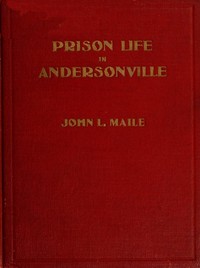
"Prison Life in Andersonville" With Special Reference to the Opening of Providence Spring — A Closer Reading
(0 User reviews)
348
Project Gutenberg
2012
Not confirmed
Andersonville Prison; United States -- History -- Civil War, 1861-1865 -- Prisoners and prisons
Readers of public-domain and historical texts
Project Gutenberg digital edition
en
Edition facts
Words
25,305
Reading time
111 min
Text sections
4
For "Prison Life in Andersonville" With Special Reference to the Opening of Providence Spring — A Closer Reading, the stored edition analysis reports 25,305 words, 1 hr 51 min estimated reading time, and 4 detected text sections.
The text analysis averages about 21.1 words per sentence, while the detected sections provide another way to judge how the source is divided.
Project Gutenberg metadata also associates the work with “Andersonville Prison,” connecting these edition facts with the source record’s subject description.
Source:
Project Gutenberg record #39584
John L. Maile's 1912 memoir focuses on the opening of Providence Spring at Andersonville, using precise diction and dialogue to convey the physical and spiritual ordeal of captivity, with a narrative voice that shifts from personal testimony to reported conversation.
Editorial Edition Score
4.6/5
★★★★★
★★★★★
Calculated from edition completeness, EPUB availability, text structure and catalogue metadata. Not a user rating.
How this score is calculated
- Description quality20 pts
- Title & short description10 pts
- Source metadata20 pts
- Text length15 pts
- Chapters / structure15 pts
- EPUB file integrity20 pts
Total of 100 points, scaled to a 2.5-5.0 range. Editions with an empty description or a missing EPUB file are not scored.
Edition quality
Public-domain source text
Read the source text
The source text is kept in the dedicated reader, separate from this catalogue record and its commentary.
John L. Maile's 1912 memoir, Prison Life in Andersonville, centers on a single, remarkable event: the unsealing of a spring that provided fresh water to thousands of starving prisoners. Rather than a sweeping history, the book is a tightly focused personal account, drawing authority from Maile's own experience as a Union soldier held in five Confederate prisons. The narrative voice is direct and unadorned, often shifting into reported dialogue that recreates moments of crisis and relief. Maile's descriptions of physical suffering are precise—feet sinking in soft sand, emaciated bodies carried up a hill—and his treatment of the spring's appearance is framed not as a miracle but as a question left open for the reader.
Diction of Deprivation
Maile's word choices consistently emphasize physical extremity. Prisoners are described as emaciated, wilted men whose feet sank in the soft sand after only a few steps. The language of exhaustion is cumulative: utterly exhausted, barely able to walk, infested prison rags. These phrases do not merely state hardship; they anchor the reader in the body's limits. When Maile recounts being carried up a hill by athletic colored soldiers, the contrast between athletic and emaciated sharpens the physical disparity. The diction avoids melodrama, relying instead on concrete, sensory details—straw bed on the floor, sponge rub, run of fever—that make the deprivation tangible.
Dialogue as Testimony
Maile frequently embeds dialogue to authenticate his narrative. In one extended exchange, he recounts a conversation with Dr. Patton, who describes receiving Andersonville prisoners. Maile writes, Extending his hand the writer said, “Dr. Patton, thank you.” When Patton misunderstands, Maile clarifies: “I do not thank you for it, but for helping me out of the ambulance at that time.” This moment of recognition—where a chance listener becomes a fellow survivor—illustrates how dialogue functions as a form of evidence. The reported speech is spare, often interrupted by physical actions (extending a hand, hesitating), which reinforces the authenticity of the encounter. Maile uses conversation not for drama but to establish shared testimony.
Structure of a Single Event
The book's table of contents reveals a deliberate architecture: chapters progress from The Writer’s Credentials through View of a Confederate Prison and The Prison Commissariat to the central cluster—A Dearth of Water, A Cry to Heaven, Unsealing of the Spring, and Was It a Miracle? This sequence builds toward a single interpretive question. The appendixes, including Contributory Testimony and Woman’s Relief Corps Memorial, frame the spring's opening as a matter of public record. Maile does not narrate a broad chronology of captivity; instead, he organizes the memoir around the spring's discovery, treating it as the defining event of his imprisonment. The structure itself argues for the event's significance.
Recurring Details of the Body
Throughout the excerpts, Maile returns to bodily states: fainting, fever, delirium, and the slow recovery of health. He describes being taken ill on a freight car, barely able to walk the steamer plank, and later fainting during a sponge bath. The medical language is precise—diagnosis, examination by experts, vitality took a turn—and links the prison experience to long-term physical consequences. In 1875-76, his health collapsed, and a surgeon advised him to prepare to leave your family in as good shape as possible. These details create a pattern: the body bears the memory of captivity long after release. Maile’s focus on physical fragility underscores the spring's importance as a source not just of water but of survival.
Maile's memoir invites readers to consider how a single event—the opening of a spring—can organize a lifetime of experience. The narrative does not attempt to cover the full scope of Andersonville; instead, it lingers on moments of physical extremity and human connection. Readers attentive to the author's choices in diction and dialogue will find a work that values testimony over interpretation, leaving the question of miracle open while grounding every claim in the body's memory.
I keep thinking about how Maile describes that first gulp of Providence Spring, and how the telling of it feels almost like witnessing a quiet miracle. It reminded me of another voice from that war, a drummer boy’s story. There is something in Drum Taps in Dixie: Memories of a Drummer Boy, 1861-1865 — Inside the Classic that holds the same raw, earnest sincerity, a young man’s own trembling witness to it all.
There are no reviews for this eBook.
There are no comments for this eBook.
Reader reflection
Record your reading impressions
A brief reflection can help important ideas stay with you longer.
Your progress
0
/
10
2
Was reading this book enjoyable?
3
Is this a title you would suggest to others?
4
Did the language feel accessible?
5
Did any part of the book stay with you emotionally?
6
Did you gain anything practical from the text?
7
How understandable was the text?
8
How would you rate its originality?
9
What changed or sharpened your thinking?
10