1

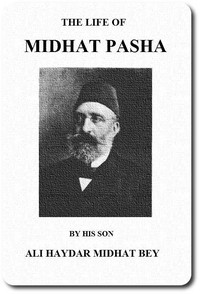
The life of Midhat Pasha; a record of his services, political reforms, banishment, and judicial murder — Reading Companion
(0 User reviews)
454
Project Gutenberg
2016
Not confirmed
Midhat Paşa, 1822-1884; Statesmen -- Turkey -- Biography; Turkey -- History -- 19th century
Readers of public-domain and historical texts
Project Gutenberg digital edition
en
Edition facts
Words
102,972
Reading time
448 min
Text sections
12
For The life of Midhat Pasha; a record of his services, political reforms, banishment, and judicial murder — Reading Companion, the stored edition analysis reports 102,972 words, 7 hr 28 min estimated reading time, and 12 detected text sections.
The text analysis averages about 29.8 words per sentence, while the detected sections provide another way to judge how the source is divided.
Project Gutenberg metadata also associates the work with “Midhat Paşa, 1822-1884,” connecting these edition facts with the source record’s subject description.
Source:
Project Gutenberg record #51243
A son's account of Midhat Pasha's political reforms, banishment, and judicial murder under Sultan Abdul Hamid II, based on private documents and notes, revealing tensions between reform and autocracy in the late Ottoman Empire.
Editorial Edition Score
4.8/5
★★★★★
★★★★★
Calculated from edition completeness, EPUB availability, text structure and catalogue metadata. Not a user rating.
How this score is calculated
- Description quality20 pts
- Title & short description10 pts
- Source metadata20 pts
- Text length15 pts
- Chapters / structure15 pts
- EPUB file integrity20 pts
Total of 100 points, scaled to a 2.5-5.0 range. Editions with an empty description or a missing EPUB file are not scored.
Edition quality
Public-domain source text
Read the source text
The source text is kept in the dedicated reader, separate from this catalogue record and its commentary.
Ali Haydar Midhat Bey, writing from exile in Eastbourne in 1903, frames his father's biography as a duty to expose what he calls the "nefarious system" of Sultan Abdul Hamid II. The preface immediately establishes a dual purpose: to correct the public record about Midhat Pasha's career and death, and to demonstrate how the Sultan suppressed reform. The author explicitly states he withholds certain international documents at the request of "high quarters," signaling that the narrative is both candid and constrained.
A Son's Exile and the Duty to Publish
Ali Haydar Midhat Bey opens with a personal confession: he spent fifteen years in forced residence in Smyrna before fleeing Ottoman territory. The preface is written from England, a "hospitable land" among a "great and free people," contrasting sharply with the "Reign of Terror" he claims Turkey then endured. He presents the book as a long-overdue obligation, based on his father's private documents and notes. The author's position is unusual—he is both a grieving son and a political exile, and he explicitly separates his respect for the Imperial Throne from his condemnation of the Sultan's methods. This tension between loyalty to an institution and opposition to its current occupant runs through the framing of the work.
The Sultan's Reluctant Constitution
The excerpts include a speech attributed to Sultan Abdul Hamid II, delivered at the opening of the Chamber of Deputies. In it, the Sultan acknowledges the "imperative necessity of continuing the efforts for progress" and refers to reforms since the Tanzimat. He mentions a special school for administrative officials, to be open "without distinction of religion." Yet the author's commentary immediately undercuts this: "Thus, against his will, the Sultan had been obliged to keep his word and to open the Chamber of Deputies, but he now left no means untried in order to deprive the people of the privilege." The speech itself is a document of official promise; the surrounding narrative frames it as a coerced concession. The author notes that the Sultan exploited subsequent events "with the greatest astuteness" to undermine the very reforms he had proclaimed.
The Fall of Midhat and the Russian War
The narrative connects Midhat Pasha's dismissal directly to international crisis. The author states that the Porte's refusal of Conference propositions placed Turkey in a "critical position," but argues that the civilized world (except Russia and the Sultan) saw the Constitution as sufficient guarantee of reform. "Nevertheless, the fall of Midhat, of the very man to whom the empire owed this Constitution, gave rise to doubt." Within days, Prince Gortchakoff issued his circular, and Russia began hostilities. The author presents a causal chain: the Sultan's betrayal of his own reformer led to loss of credibility abroad, which in turn enabled Russian aggression. This section illustrates how domestic political maneuvering is portrayed as having direct, disastrous consequences for the empire's international standing.
Readers should approach this text as a partisan document—a son's defense of his father and an indictment of a regime. The author is explicit about his aims and his limitations, including the deliberate omission of certain sensitive documents. The narrative weaves together personal grievance, political analysis, and documentary evidence. Those interested in late Ottoman reform, the mechanics of autocratic backlash, or the genre of political biography from exile will find this a richly layered, if necessarily partial, account.
Reading Ali Midhat’s account of his father’s reforms and ruin, I kept thinking about how devotion outlasts injustice. The same quiet loyalty surfaces in Reminiscences of the Military Life and Sufferings of Col. Timothy Bigelow, Commander of the Fifteenth Regiment of the Massachusetts Line in the Continental Army, during — A Reader’s Guide, where a son preserves his father’s rugged service. Both books feel less like history and more like a candle left burning for someone loved.
There are no reviews for this eBook.
There are no comments for this eBook.
Reader reflection
How will you remember this book?
Save your reaction, strongest insight, and memorable passage.
Your progress
0
/
10
2
What was your overall reaction to the book?
3
How likely are you to recommend this book?
4
How much effort did this book require?
5
What was the strongest part of the book?
6
Did the book meet your expectations?
7
Would you read this book again?
8
How did the pace of the book feel?
9
In one sentence, what did you learn?
10