1

Reminiscences of the Military Life and Sufferings of Col. Timothy Bigelow, Commander of the Fifteenth Regiment of the Massachusetts Line in the Continental Army, during — A Reader’s Guide
(0 User reviews)
1961
Project Gutenberg
2008
Not confirmed
United States -- History -- Revolution, 1775-1783; Bigelow, Timothy, 1739-1790; United States. Continental Army -- Military life
Readers of public-domain and historical texts
Project Gutenberg digital edition
en
Edition facts
Words
10,027
Reading time
44 min
Text sections
2
For Reminiscences of the Military Life and Sufferings of Col. Timothy Bigelow, Commander of the Fifteenth Regiment of the Massachusetts Line in the Continental Army, during — A Reader’s Guide, the stored edition analysis reports 10,027 words, 44 min estimated reading time, and 2 detected text sections.
The text analysis averages about 19.6 words per sentence, while the detected sections provide another way to judge how the source is divided.
Project Gutenberg metadata also associates the work with “United States -- History -- Revolution, 1775-1783,” connecting these edition facts with the source record’s subject description.
Source:
Project Gutenberg record #24634
Charles Hersey's 1860 biography of Col. Timothy Bigelow, based on his father's firsthand accounts, traces the commander's Revolutionary War service from Quebec to Yorktown, emphasizing personal sacrifice and local Worcester connections.
Editorial Edition Score
4.5/5
★★★★★
★★★★★
Calculated from edition completeness, EPUB availability, text structure and catalogue metadata. Not a user rating.
How this score is calculated
- Description quality20 pts
- Title & short description10 pts
- Source metadata20 pts
- Text length15 pts
- Chapters / structure15 pts
- EPUB file integrity20 pts
Total of 100 points, scaled to a 2.5-5.0 range. Editions with an empty description or a missing EPUB file are not scored.
Edition quality
Public-domain source text
Read the source text
The source text is kept in the dedicated reader, separate from this catalogue record and its commentary.
Charles Hersey opens his 1860 biography not with a historian's distance but with a child's memory: he was “dandled upon the knee” of his father, a veteran who wept while recounting Col. Timothy Bigelow's sufferings. This personal frame—the author inheriting stories by the hearth—shapes every page. Hersey admits his earliest history book was Morse's Geography (1814), which he “committed the whole to memory.” The narrative that follows is less a formal military study than a filial tribute, built from oral tradition and a handful of printed sources. Readers should expect a voice that mourns and celebrates, not one that analyzes strategy or debates causes.
A Father's Recollections as Source
Hersey repeatedly flags that his information comes from “one of Col. Bigelow's men” or from his own father's lap. The introduction makes this explicit: his father spent eight years in the struggle and taught him Bigelow's name “long before I was able to articulate his name.” This reliance on personal testimony gives the book its emotional weight but also its limits. Hersey does not cite official records or letters; he reports what he heard. For instance, the anecdote of a cowardly Worcester soldier who cried “In the name of God, why don't Col. Bigelow order us to retreat?” is attributed to a veteran who was present. Hersey withholds the man's name because his children still live in the city—a detail that underscores the tight-knit, local nature of his evidence.
Bigelow's Relentless Devotion
The colonel is portrayed as a man who “seemed to feel that the whole responsibility of the struggle rested on him.” Hersey catalogs hardships that failed to cool his ardor: “the deep snows of Quebec,” “the fetid stench of an English prison ship,” “the blood and carnage of Saratoga and of Monmouth,” and “the blood-stained soil of Valley Forge.” The prose accumulates these trials in parallel clauses, building a portrait of unyielding resolve. At Verplanck's Point, when the fort of Lafayette is stormed, Bigelow lays aside his sword, takes a musket from a sick soldier, and fights “more like a tiger than a man.” The language is deliberately heightened, aiming to inspire rather than to document precise tactics.
Local Geography and the Worcester Lens
Hersey repeatedly anchors Bigelow's story to Worcester, Massachusetts. Bigelow left “Worcester and all its pleasant associations” to fight. The cowardly soldier is identified only as a Worcester man whose children “are now living here.” Hersey himself writes from Worcester, and the book was printed there by Henry J. Howland. This local focus means that distant campaigns—Quebec, Pennsylvania, the Carolinas—are filtered through the hometown perspective. When Hersey describes Peekskill as “forty-six miles north of New York, and one hundred and six miles south of Albany,” he is not just giving distances; he is mapping the war for readers who know their own county but may not know the Hudson Valley.
The Emotional Weight of the Wyoming Massacre
One of the most charged moments in the excerpts is Bigelow's reaction to the “bloody butchery at Wyoming.” Hersey reports that upon hearing the news, Bigelow “walked his room for one hour without speaking,” then exclaimed, “Our worst enemies are those of our own household.” The phrase targets Tories, whom Bigelow later confronts at Robinson's Farms, breaking up a “nest” supplying the British. Hersey calls this encounter a “bloodless battle,” but the emotional register is anything but bloodless: Bigelow's “iron nerve” is aroused “to its utmost tension.” The anecdote reveals how Hersey uses a single event to crystallize Bigelow's character—his silence, his delayed outburst, and his subsequent action against internal enemies.
Hersey's Reminiscences is best read as a memorial, not a military history. Its value lies in the texture of inherited memory—the weeping father, the unnamed coward, the colonel who fought with a borrowed musket. Readers interested in the social history of Revolutionary commemoration in mid-nineteenth-century Worcester will find rich material here. Those seeking a balanced campaign narrative should look elsewhere. Approach the book as a document of how one family and one community chose to remember a hero, and you will find its quiet power.
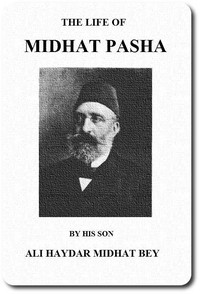
That Bigelow biography stayed with me mostly for how quietly it holds its sorrow—a man spending everything, then returning to find the world had moved past his sacrifice. It made me think of another kind of wreckage, the one in The life of Midhat Pasha; a record of his services, political reforms, banishment, and judicial murder — Reading Companion. Both men gave everything, and both were somehow erased by the very systems they trusted. I keep circling that ache.
There are no reviews for this eBook.
There are no comments for this eBook.
Reader reflection
Your personal reading reflection
Build a private reading journal entry for this title.
Your progress
0
/
10
2
How did the book work for you overall?
3
Would you encourage someone else to read it?
4
What was the reading difficulty like?
5
How strongly did the book affect you emotionally?
6
How closely did the book connect with your experience?
7
How valuable was this book for your own interests?
8
Which aspect of the book did you value most?
9
Which lesson or insight stayed with you?
10