1

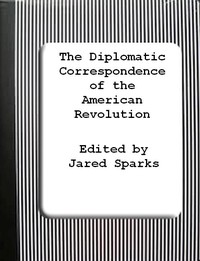
The Diplomatic Correspondence of the American Revolution, Vol. 02 — Themes and Context
(0 User reviews)
121
Project Gutenberg
2016
Not confirmed
United States -- Foreign relations -- 1775-1783; United States -- History -- Revolution, 1775-1783 -- Sources
Readers of public-domain and historical texts
Project Gutenberg digital edition
en
Edition facts
Words
153,956
Reading time
670 min
Text sections
21
For The Diplomatic Correspondence of the American Revolution, Vol. 02 — Themes and Context, the stored edition analysis reports 153,956 words, 11 hr 10 min estimated reading time, and 21 detected text sections.
The text analysis averages about 25.2 words per sentence, while the detected sections provide another way to judge how the source is divided.
Project Gutenberg metadata also associates the work with “United States -- Foreign relations -- 1775-1783,” connecting these edition facts with the source record’s subject description.
Source:
Project Gutenberg record #52566
This volume of Jared Sparks's edited collection presents letters from American commissioners in Europe during the Revolutionary War, revealing tensions between envoys like Arthur Lee and Benjamin Franklin, and offering firsthand accounts of military strategy, European diplomacy, and the financial struggles of the fledgling United States.
Editorial Edition Score
4.9/5
★★★★★
★★★★★
Calculated from edition completeness, EPUB availability, text structure and catalogue metadata. Not a user rating.
How this score is calculated
- Description quality20 pts
- Title & short description10 pts
- Source metadata20 pts
- Text length15 pts
- Chapters / structure15 pts
- EPUB file integrity20 pts
Total of 100 points, scaled to a 2.5-5.0 range. Editions with an empty description or a missing EPUB file are not scored.
Edition quality
Public-domain source text
Read the source text
The source text is kept in the dedicated reader, separate from this catalogue record and its commentary.
Arthur Lee's correspondence in this volume is marked by a persistent, aggrieved tone that contrasts sharply with the more measured dispatches of his colleagues. In a letter of January 3, 1778, Lee complains that Dr. Franklin has "positively declined supplying my expenses" at the Spanish court, implying personal animosity rather than policy. This recurring friction between envoys—Lee versus Franklin, Lee versus Silas Deane—forms a subtext of personal rivalry that runs alongside the official business of securing loans and treaties.
Lee's reports also offer granular intelligence: he notes that Admiral Rodney's plan to "block up and harass continually the whole of our coast" involves three divisions with landed forces, and he calculates that British debt will reach 200,000,000 pounds after the next campaign. Such details ground the diplomatic maneuvering in concrete military and financial realities.
Diction of Discontent: Lee's Voice
Arthur Lee's letters are laced with frustration and suspicion. He writes of being "so unfortunate as not to be in his good graces" regarding Franklin, and he suspects that "the same means have been employed, and by the same persons, to injure me" at the Spanish court. This language of personal grievance is not merely stylistic; it reflects a genuine rift among the American commissioners. Lee's repeated requests for instructions from Congress—"I am yet without any instructions for Spain"—suggest a sense of isolation and bureaucratic neglect. His choice of words, such as "counteract their intentions" and "drive gentlemen away from Europe," frames his predicament as a deliberate campaign against him. This diction provides a window into the interpersonal dynamics that shaped early American diplomacy, where personal enmity could impede official business.
Strategic Intelligence in Dispatches
The letters are rich with military and political intelligence, often conveyed in terse, factual sentences. Lee reports that "the combined fleet is ordered into the British channel, and the troops to prepare for the invasion of England," and that "the siege of Gibraltar goes on in form, both by sea and land." These observations are not mere gossip; they are assessments of European power balances that directly affect American prospects. The correspondents also track diplomatic shifts: Lee notes that Lord Bute's son was sent on an "extraordinary embassy" to Turin, but that plan was abandoned, and the Spanish ambassador left Paris. Such details reveal how American envoys acted as intelligence gatherers, parsing the movements of European courts to predict British resolve. The precision of these reports—naming ships, commanders, and troop numbers—underscores the practical value of the correspondence beyond its diplomatic function.
The Structure of Official Exchange
The volume is organized by correspondent, with Arthur Lee's letters forming a substantial block. Each letter follows a formal pattern: a salutation ("To the Committee of Foreign Affairs"), a date and place, a body of news and requests, and a closing ("I have the honor to be, &c."). This uniformity reflects the bureaucratic nature of the correspondence, but within it, individual voices emerge. The Committee's replies, such as James Lovell's terse note of October 13, 1779, are brief and procedural, contrasting with Lee's expansive complaints. The editorial apparatus by Jared Sparks includes a detailed table of contents that summarizes each letter's content—e.g., "British preparations for the ensuing campaign.—Plan of operations."—which guides the reader through the dense material. This structure highlights the editorial hand shaping the raw documents into a coherent narrative of revolutionary diplomacy.
Recurring Concerns: Finance and Recognition
Two themes recur across the letters: money and legitimacy. Lee repeatedly mentions exhausted funds: "The public funds, which were in my hands, being nearly exhausted." He also presses for official recognition from Spain, noting that he has "not yet received any instructions from Congress relative to Spain, nor any answer from that Court relative to my reception there." These concerns are not unique to Lee; they echo throughout the volume as American agents struggle to secure loans and treaties without a stable government at home. The letters reveal a constant negotiation between the need for European support and the limited authority of the Continental Congress. Lee's insistence on his own marginalization—"it may not remain in the power of any individual to counteract their intentions"—ties these practical worries to the personal conflicts that pervade the correspondence.
Readers approaching this volume should attend to the interplay between official business and personal voice. The letters are not merely records of policy; they are documents of human ambition, rivalry, and perseverance. Sparks's editorial choices—grouping by author, summarizing contents—make the collection navigable, but the real reward lies in the details: a complaint about expenses, a calculation of enemy debt, a report of a fleet's movement. These fragments, when read together, build a textured picture of the Revolution as it was conducted from European capitals.
There is a particular ache in reading Franklin and Lee’s quarrels—two men, same cause, yet worlds apart. It reminds me of how revolutions devour their own architects. That same lonely struggle echoes in The Swedish Revolution Under Gustavus Vasa — A Reader’s Guide, where a nation’s rebirth rests on one man’s weary shoulders. I have always found that kinship between letters and chronicles—the quiet weight of founding something. Neither book shouts; they simply endure, like old friends. . .
There are no reviews for this eBook.
There are no comments for this eBook.
Reader reflection
How did this book work for you?
Your answers remain private and are stored only in this browser.
Your progress
0
/
10
2
How did the book work for you overall?
3
Would you recommend this book to another reader?
4
What was the reading difficulty like?
5
How would you rate its originality?
6
Did it raise ideas you would like to talk about?
7
How did the reading compare with what you expected?
8
Could you follow the author’s main argument?
9
Which lesson or insight stayed with you?
10