1

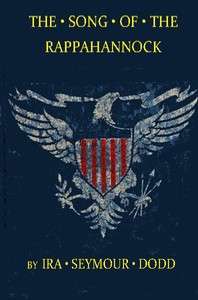
The Song of the Rappahannock: Sketches of the Civil War — Story, Setting & Ideas
948
2
Project Gutenberg
2014
United States -- History -- Civil War, 1861-1865 -- Personal narratives
Readers of public-domain and historical texts
Project Gutenberg digital edition
en
Edition facts
Words: 40,981
Reading time: 179 min
Text sections: 4
Source:
Project Gutenberg record #45568
A Union soldier's sketches of Civil War life, focusing on the Army of the Potomac's Second Division, Sixth Corps. The narrative uses the recurring metaphor of a 'Song' to describe battle sounds, and shifts between camp routines, a prisoner's vigil, a cowardice degradation, and a review by Lincoln.
Editorial Edition Score
4.6/5
★★★★★
★★★★★
Calculated from edition completeness, EPUB availability, text structure and catalogue metadata. Not a user rating.
Edition quality
The opening sketch gives the book its title by personifying the sound of battle as a 'Song'—a 'weird, fantastic, sinister' whisper that could swell into 'discordant screams mingled with thunderous roar.' This metaphor recurs throughout, framing combat as an auditory experience. The author, a young non-commissioned officer in the Army of the Potomac, anchors his observations in specific details: the bad water that sickened half his regiment, the spring a mile and a half away, and the errand that led him and 'Joe' to fetch clean water. These small, concrete scenes establish a voice that is both personal and precise.
The Song as a Structural Device
The book’s title is not merely decorative. Dodd returns to the 'Song' at key moments, using it to unify disparate episodes. In the first sketch, he describes its range from a 'persuasive whisper' to a 'chorus of awful and discordant screams.' This auditory motif gives the collection a sensory coherence, linking scenes that otherwise range from camp gossip to combat. The Song is always present, even when silent—a memory that 'can never forget.' By treating battle noise as a single, fateful composition, Dodd imposes order on chaos. The metaphor also allows him to shift scale: the Song is both personal (addressed 'to you personally') and collective (a chorus). This dual focus recurs in later sketches, where individual soldiers’ stories are set against the army’s vast machinery.
The Prisoners’ Night and the Deserter’s Gamble
One of the most striking scenes occurs at a brigade guardhouse, where three deserters spend the night talking. Dodd, as serjeant of the guard, overhears them 'lay bare their lives'—confessing childhood misdeeds and marital regrets. One man, a former serjeant, hints at crimes that 'would hang me if they were known.' In the morning, Dodd sees he is 'strikingly handsome, a most soldierly-looking fellow.' The deserters are not executed; instead, they are returned to the ranks with a promise of pardon if they fight bravely. In the next battle, the ex-serjeant leaps from the first boat, charges alone at the enemy earthwork, and captures half a dozen prisoners. This episode—a miniature arc of disgrace, suspense, and redemption—shows how Dodd structures his sketches around moral and emotional turning points, not just chronology.
Degradation and Review: Two Ceremonies of the Army
Dodd contrasts two formal military rituals. The first is the degradation of an officer for cowardice: the division forms a hollow square, the sentence is read, and the adjutant tears off the officer’s shoulder-straps, breaks his sword, and marches him away. Dodd notes the 'deathly pale face' and the 'heart-break of despair,' calling it 'a hundred times worse than death.' The second is the review of the army by President Lincoln on a 'dull wintry day.' The regiment marches miles to a 'vast, desolate, open space' and waits for hours. These two scenes—one of public shame, one of national authority—frame the army’s internal discipline and its place in a larger political order. Dodd does not editorialize; he lets the stark contrast between the broken sword and the waiting host speak for itself.
Movement Between Scenes: From Camp to Battlefield
The book’s structure relies on abrupt shifts in setting and tone. A paragraph about bad water and sick lists gives way to a prisoner’s confession, then to a boat assault, then to a parade ground. Dodd does not provide transitions; he moves by juxtaposition. This technique mirrors the soldier’s experience, where boredom and terror alternate without warning. The excerpts show him moving from the guardhouse (interior, nocturnal, intimate) to the riverbank (exterior, daylight, violent) to the reviewing ground (open, cold, ceremonial). Each scene is self-contained, yet together they build a composite portrait of army life. The reader is left to infer the connections—between the deserter’s gamble and the officer’s disgrace, between the Song’s whisper and Lincoln’s silent presence. Dodd trusts the details to carry meaning.
These sketches do not attempt a continuous narrative of the war. Instead, they offer a series of sharply observed moments—a night of talk, a broken sword, a river crossing—that accumulate into a portrait of soldiering. Dodd’s focus on the Second Division of the Sixth Corps gives the book a specific, local perspective. Readers should attend to the way he uses sound, silence, and ceremony to structure memory. The Song of the Rappahannock is less a history than a collection of echoes.
Reader reflection
Record your reading impressions
A brief reflection can help important ideas stay with you longer.
Your progress
0
/
10
2
Did this book hold your interest?
3
How likely are you to recommend this book?
4
What was the reading difficulty like?
5
How original did the book feel?
6
Do you expect to return to this book?
7
Would you like to discuss this book with someone?
8
How much did the book move you?
9
Which lesson or insight stayed with you?
10