1

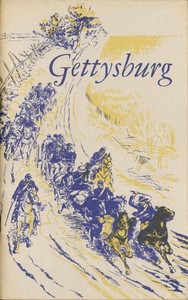
Gettysburg National Military Park, Pennsylvania — Inside the Classic
(0 User reviews)
1238
Project Gutenberg
2017
Not confirmed
United States -- History -- Civil War, 1861-1865; Gettysburg, Battle of, Gettysburg, Pa., 1863; Gettysburg National Military Park (Pa.)
Readers of public-domain and historical texts
Project Gutenberg digital edition
en
Edition facts
Words
17,926
Reading time
78 min
Text sections
3
Gettysburg National Military Park, Pennsylvania — Inside the Classic can be approached with a clearer sense of reading commitment from its source measurements: 17,926 words, 1 hr 18 min estimated reading time, and 3 detected text sections.
The text analysis averages about 19.9 words per sentence, while the detected sections provide another way to judge how the source is divided.
Project Gutenberg metadata also associates the work with “United States -- History -- Civil War, 1861-1865,” connecting these edition facts with the source record’s subject description.
Source:
Project Gutenberg record #56209
Frederick Tilberg's 1954 handbook for Gettysburg National Military Park combines tactical narrative with administrative detail, using precise diction to describe troop movements, burial logistics, and the park's creation. The authorial voice is factual yet evocative, grounding the battle's drama in specific terrain and decision-making.
Editorial Edition Score
4.5/5
★★★★★
★★★★★
Calculated from edition completeness, EPUB availability, text structure and catalogue metadata. Not a user rating.
How this score is calculated
- Description quality20 pts
- Title & short description10 pts
- Source metadata20 pts
- Text length15 pts
- Chapters / structure15 pts
- EPUB file integrity20 pts
Total of 100 points, scaled to a 2.5-5.0 range. Editions with an empty description or a missing EPUB file are not scored.
Edition quality
Public-domain source text
Read the source text
The source text is kept in the dedicated reader, separate from this catalogue record and its commentary.
Frederick Tilberg's Gettysburg National Military Park, Pennsylvania opens with a stark numerical frame: 75,000 Confederates against 88,000 Union troops, 51,000 casualties. The prose immediately establishes a tone of measured authority, characteristic of the National Park Service handbook series. Tilberg does not linger on grand pronouncements; instead, he moves directly to the tactical situation in spring 1863, describing the Confederate army's position after Chancellorsville with phrases like "swollen the current and he could not cross." This blend of hydrological metaphor and military fact recurs throughout, as when he notes that the battle "had swirled about" the town's 2,400 inhabitants. The author's diction consistently favors concrete verbs and spatial precision, anchoring the narrative in the physical landscape of Pennsylvania farmland.
Tactical Diction and the Shape of Battle
Tilberg's account of the three days relies on a vocabulary of movement and position. He writes of troops that "converge," "rage," and "swirl," but also of specific features like Oak Ridge, Little Round Top, and Culp's Hill. The description of Pickett's Charge is notably restrained: it is "the famed Confederate assault" that "has become known throughout the world." The author avoids florid language, instead letting the scale of the engagement speak through numbers and place names. When discussing the artillery duel, he specifies the time—"at One o'clock"—and the location, creating a sense of chronological and geographical exactness. This precision extends to the aftermath: the burial of 3,512 bodies, of which 1,664 remained unidentified. Tilberg's choice to include these figures without commentary underscores the human cost through administrative detail.
The Language of Logistics and Aftermath
The section on the establishment of the burial ground reveals Tilberg's attention to the mechanics of commemoration. He describes how Governor Curtin appointed David Wills as special agent, how land on Cemetery Hill was purchased, and how William Saunders laid out the grounds in State lots. The prose is methodical: "Within 6 weeks, Mr. Wills had purchased 17 acres of ground... and engaged William Saunders." Tilberg notes that "great care had been taken to identify the bodies on the field" through "marked boards" and personal effects, yet 979 remained unknown even by state. This juxtaposition of careful process and persistent anonymity is a recurring motif. The author's voice remains neutral, but the accumulation of such details—the iron fence, the keeper's lodge, the eventual total of 4,399 interments—builds a quiet argument about the scale of loss and the effort required to honor it.
Voice and the Park Service Mandate
Tilberg writes as an institutional historian, his language shaped by the National Park Service's mission to "conserve the scenic, scientific, and historic heritage." The handbook's structure—moving from situation to campaign plan to each day's fighting, then to Lincoln and the park's development—reflects a pedagogical intent. The authorial voice is consistent: declarative sentences, third-person perspective, and a preference for the passive voice when describing official actions ("the land was purchased," "the cemetery was enclosed"). Yet there are moments of vividness, as when he notes that "kindly folk from neighboring towns came to help those of Gettysburg in ministering to the needs of the maimed and shattered men." The word "shattered" is a rare departure from clinical tone, hinting at the human reality beneath the administrative surface. Tilberg's diction thus oscillates between the bureaucratic and the evocative, a tension that defines the handbook genre.
Recurring Details and Structural Choices
Several details recur across the excerpts, suggesting Tilberg's thematic priorities. The number 51,000 appears in the opening and is echoed by the 3,512 bodies reinterred and the 1,664 unidentified. The phrase "Peace Eternal in a Nation United" from the Eternal Light Peace Memorial is quoted without comment, serving as a thematic bookend. Structurally, the handbook devotes significant space to the Lincoln section, including the five autograph copies of the Gettysburg Address and the Soldiers' National Monument. This emphasis reflects the park's dual identity as both battlefield and commemorative site. Tilberg's choice to include a guide tour and administrative information further underscores the work's practical purpose. The author does not interpret the battle's meaning; instead, he presents the evidence—the terrain, the orders, the burial records—and lets the reader draw conclusions.
Tilberg's handbook rewards readers who attend to its specific language and structure. The author's voice is that of a careful chronicler, not a dramatist, and the text's value lies in its accumulation of precise details: the number of graves per state, the timing of the artillery duel, the dimensions of the cemetery wall. Readers interested in the battle's tactical geography will find the guide tour essential, while those curious about the mechanics of public memory should linger on the Lincoln section. The handbook is best approached as a primary document of mid-century historical practice, revealing how the National Park Service chose to frame one of America's most consequential battles.
Standing on Little Round Top, I remember my grandfather’s quiet voice, not the noise of history. He never spoke of battles, only of the men who walked home. That same hush lived in Recollections with the Third Iowa Regiment — A Closer Reading, where the dirt underfoot mattered more than the glory. Both books left me listening for footsteps, not cannons.
There are no reviews for this eBook.
There are no comments for this eBook.
Reader reflection
What did you think of this book?
Answer a few questions and save a private reflection on this device.
Your progress
0
/
10
2
Was reading this book enjoyable?
3
How likely are you to recommend this book?
4
Did the language feel accessible?
5
Did the book give you something worth debating?
6
What did you think about the pace?
7
How well did it match your expectations?
8
How distinctive were its ideas or approach?
9
What changed or sharpened your thinking?
10