1

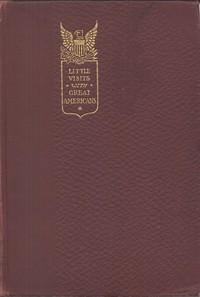
Little Visits with Great Americans, Vol. 1 (of 2) Or Success, Ideals and How to Attain Them — Text and Context
(0 User reviews)
80
Project Gutenberg
2015
Not confirmed
Success; United States -- Biography; United States -- History -- 19th century -- Biography
Readers of public-domain and historical texts
Project Gutenberg digital edition
en
Edition facts
Words
85,292
Reading time
371 min
Text sections
9
Little Visits with Great Americans, Vol. 1 (of 2) Or Success, Ideals and How to Attain Them — Text and Context can be approached with a clearer sense of reading commitment from its source measurements: 85,292 words, 6 hr 11 min estimated reading time, and 9 detected text sections.
The text analysis averages about 18.5 words per sentence, while the detected sections provide another way to judge how the source is divided.
Project Gutenberg metadata also associates the work with “Success,” connecting these edition facts with the source record’s subject description.
Source:
Project Gutenberg record #48174
Editor Orison Swett Marden compiles first-person success narratives from prominent Americans, emphasizing practical experience over theory. The excerpt on Theodore Roosevelt illustrates the collection's method: tracing a public figure's development through specific childhood details, health struggles, and western adventures, framed as lessons in character-building.
Editorial Edition Score
4.8/5
★★★★★
★★★★★
Calculated from edition completeness, EPUB availability, text structure and catalogue metadata. Not a user rating.
How this score is calculated
- Description quality20 pts
- Title & short description10 pts
- Source metadata20 pts
- Text length15 pts
- Chapters / structure15 pts
- EPUB file integrity20 pts
Total of 100 points, scaled to a 2.5-5.0 range. Editions with an empty description or a missing EPUB file are not scored.
Edition quality
Public-domain source text
Read the source text
The source text is kept in the dedicated reader, separate from this catalogue record and its commentary.
This volume collects interviews originally published in Success magazine, each presenting a prominent American's life story in their own words. The preface frames the project as a repository of practical wisdom, arguing that learning from others' experience is wiser than personal trial and error. The editorial voice is direct and prescriptive, urging readers to absorb the 'practical helpfulness' of the narratives.
The excerpt on Theodore Roosevelt exemplifies the collection's approach: it opens with a precise detail about his childhood nickname ('Tedie,' not 'Teddy'), then traces his physical frailty, his family's late-night carriage rides to relieve his asthma, and his deliberate move to the Dakota badlands to build strength. The account is anecdotal, not analytical, and emphasizes effort over innate talent.
From Frailty to Force: Roosevelt's Early Years
The Roosevelt sketch opens with a striking contrast: the future president was a 'delicate child' who 'suffered such tortures with asthma' that his father would drive him for miles in the middle of the night so he could breathe. The narrative then pivots to his western sojourn, presenting it as a conscious decision to build 'a constitution sturdy and strong.' The language is brisk and concrete, noting that he entered the 'wild and woolly' town of Little Missouri in 1883, a place of 'bad men' and rough conditions.
This pattern—identifying a weakness, then describing a deliberate remedy—recurs throughout the volume. The editor selects details that reinforce a moral: adversity can be overcome through will and action. The Roosevelt piece, for instance, mentions his Harvard side-whiskers and his passion for collecting natural history specimens, small touches that humanize the figure without straying into hagiography.
The Constitution as Practical Politics
Another excerpt shifts from biography to political commentary, discussing the drafting of the U.S. Constitution. The speaker contrasts the American framers with the French theorist Sieyés, emphasizing that the U.S. document 'worked, primarily, because it was drawn up by practical politicians' who believed in 'decency, as well as in common sense.' The argument is blunt: theorists would have produced a constitution that 'would not have worked,' while corrupt men would have produced one that 'would not have worked at all.'
This passage reveals the volume's ideological thread: success is tied to practical, ethical action. The same logic applies to individuals—Roosevelt's western adventure is a practical solution to a physical problem. The book consistently valorizes doing over theorizing, and integrity over expediency.
A Gallery of Self-Made Narratives
The preface promises a range of careers—'invention, manufacture, transportation, commerce, finance, in political and public life, and in the professions'—so that each reader may 'find his ideal of success fulfilled in real life.' The editorial hand is light: the interviews are presented as first-person accounts, with minimal framing beyond a brief introduction. This structure gives the volume a documentary quality, as if the reader is overhearing the subjects reflect on their turning points.
The Roosevelt excerpt is typical in its focus on formative experiences rather than adult achievements. It ends with his entry into the badlands, not his presidency. The implied lesson is that character is forged early, and that the details of youth—nicknames, illnesses, hobbies—matter. The book thus functions as a kind of applied biography, where each life is a case study in the principles of success.
Readers approaching this collection should treat each interview as a self-contained artifact, noting how the subject chooses to frame their own story. The editor's selections—emphasizing childhood, struggle, and practical wisdom—shape the overall impression, but the voices remain distinct. Pay attention to what each figure omits as much as what they include; the gaps often reveal as much about their ideals as the anecdotes themselves.
Reading Little Visits with Great Americans, I lingered on Roosevelt’s boyhood struggles—how a frail child becomes a rancher through sheer will. It reminded me, oddly, of a quieter book about partnership and shared purpose, where strength grows not from solitude but from alignment. Empire Partnership — Edition Insights holds that same patient, almost tender attention to how character and collaboration shape one another, like old letters found in a drawer.
There are no reviews for this eBook.
There are no comments for this eBook.
Reader reflection
Your personal reading reflection
Build a private reading journal entry for this title.
Your progress
0
/
10
2
How much did you enjoy the reading experience?
3
Is this a title you would suggest to others?
4
How much effort did this book require?
5
How did the pace of the book feel?
6
How useful did the reading feel?
7
How personally connected did you feel to the book?
8
How well did it match your expectations?
9
What changed or sharpened your thinking?
10