1

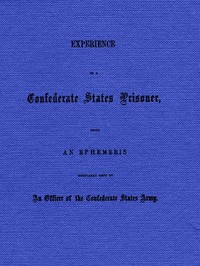
Experience of a Confederate States Prisoner Being an Ephemeris Regularly Kept by an Officer of the Confederate States Army — Reading Companion
(0 User reviews)
417
Project Gutenberg
2018
Not confirmed
United States -- History -- Civil War, 1861-1865 -- Prisoners and prisons; United States -- History -- Civil War, 1861-1865 -- Personal narratives, Confederate
Readers of public-domain and historical texts
Project Gutenberg digital edition
en
Edition facts
Words
35,863
Reading time
156 min
Text sections
6
The catalog record for Experience of a Confederate States Prisoner Being an Ephemeris Regularly Kept by an Officer of the Confederate States Army — Reading Companion provides practical reading context through 35,863 words, 2 hr 36 min estimated reading time, and 6 detected text sections.
The text analysis averages about 23.6 words per sentence, while the detected sections provide another way to judge how the source is divided.
Project Gutenberg metadata also associates the work with “United States -- History -- Civil War, 1861-1865 -- Prisoners and prisons,” connecting these edition facts with the source record’s subject description.
Source:
Project Gutenberg record #57475
A Confederate officer's firsthand diary of capture and imprisonment during the Civil War, recording daily hardships, camp conditions, and the psychological toll of Yankee captivity, with a preface defending plain facts over fiction.
Editorial Edition Score
4.7/5
★★★★★
★★★★★
Calculated from edition completeness, EPUB availability, text structure and catalogue metadata. Not a user rating.
How this score is calculated
- Description quality20 pts
- Title & short description10 pts
- Source metadata20 pts
- Text length15 pts
- Chapters / structure15 pts
- EPUB file integrity20 pts
Total of 100 points, scaled to a 2.5-5.0 range. Editions with an empty description or a missing EPUB file are not scored.
Edition quality
Public-domain source text
Read the source text
The source text is kept in the dedicated reader, separate from this catalogue record and its commentary.
This diary, kept by a Confederate officer and published in 1862, opens with a preface that explicitly rejects fiction in favor of "plain facts" about war. The author insists that readers need "homelier viands" than mythological nectar, arguing that imaginary tales cannot compete with the real suffering of sick and wounded soldiers. The diary itself begins with a terse account of a Confederate victory at McDowell, Virginia, on May 8, 1862, where General Jackson routed Union forces under Milroy and Schenck. The tone is immediate and unadorned, focused on marches, battles, and captured supplies.
A Preface That Frames the Narrative
The preface sets a combative tone, calling Yankees "disciples of Satan" and lamenting Southern shortages of paper and metal. The author argues that newspapers and books are still printed and eagerly read, especially those bearing on the war. He positions his diary as a corrective to frivolous novels, claiming that "plain facts challenge our attention rather than the gaudy fiction of novels." This rhetorical stance—valorizing direct experience over imaginative literature—shapes the entire work. The preface also reveals material constraints: paper is scarce because it is used for cartridges, and metal that could become bullets is instead used for type. These details ground the diary in the physical realities of the Confederacy.
The Diary's Sparse, Factual Entries
The diary entries are brief and military in focus. The first entry for May 1862 notes a "heavy march" on the 6th and 7th, leading to a Confederate victory at McDowell. The author records that Jackson "routed and drove the enemy" twenty-five miles, capturing ammunition, stores, arms, and prisoners. There is no embellishment; the language is that of an officer's log. This style continues throughout the excerpts, with entries concentrating on movements, skirmishes, and supplies. The lack of personal reflection or emotional commentary suggests a deliberate effort to present an unvarnished record, consistent with the preface's promise of "plain facts."
Tensions Over Press Censorship and Information Control
A notable section of the excerpts shifts from battlefield reports to a critique of Union press restrictions. The author quotes a newspaper editorial that condemns the War Department's restraints on publishing army news, warning that journalism under such martial law "must run down to what it is in Constantinople, Rome, or Vienna." The editorial highlights the inequality of imprisoning some journalists while allowing others like Wendell Phillips to speak freely. The author then notes the difficulty of knowing what to publish, given that even copying army news could be criminal. This passage reveals a preoccupation with information control and the fragility of free expression during wartime, adding a layer of political commentary to the personal narrative.
Readers should approach this diary as a document shaped by its moment: a Confederate officer's attempt to bear witness to captivity while also engaging in the broader war of words over press freedom and the nature of truth. The juxtaposition of terse battle logs with editorial commentary on censorship offers a window into how one soldier navigated the competing demands of record-keeping and propaganda. The diary's value lies not in literary flourish but in its raw, unpolished testimony.
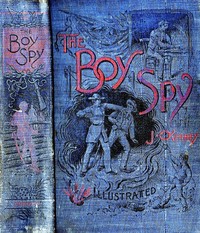
There’s something about a prisoner’s diary—the way small days get weighed so carefully—that makes me think of the boy who slipped through lines instead of waiting them out. One man marking time, another stealing through it. I found myself holding the Experience of a Confederate States Prisoner close, then setting it down to wonder about The Boy Spy A substantially true record of secret service during the war of the rebellion, a correct account of events witnessed by a soldier — Edition Insights, and how different fear feels when you can still run.
There are no reviews for this eBook.
There are no comments for this eBook.
Reader reflection
Your personal reading reflection
Build a private reading journal entry for this title.
Your progress
0
/
10
2
How much did you enjoy the reading experience?
3
Is this a title you would suggest to others?
4
How much effort did this book require?
5
How strong was your personal connection to the text?
6
Did you gain anything practical from the text?
7
How clear did the writing feel?
8
Do you expect to return to this book?
9
What changed or sharpened your thinking?
10