1

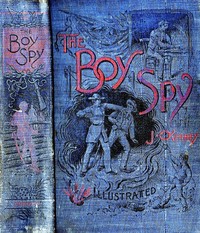
The Boy Spy A substantially true record of secret service during the war of the rebellion, a correct account of events witnessed by a soldier — Edition Insights
(0 User reviews)
1010
Project Gutenberg
2010
Not confirmed
United States -- History -- Civil War, 1861-1865 -- Personal narratives; United States -- History -- Civil War, 1861-1865 -- Secret service
Readers of public-domain and historical texts
Project Gutenberg digital edition
en
Edition facts
Words
232,187
Reading time
1010 min
Text sections
23
The source record for The Boy Spy A substantially true record of secret service during the war of the rebellion, a correct account of events witnessed by a soldier — Edition Insights measures this digital text at 232,187 words, 16 hr 50 min estimated reading time, and 23 detected text sections.
The text analysis averages about 28.0 words per sentence, while the detected sections provide another way to judge how the source is divided.
Project Gutenberg metadata also associates the work with “United States -- History -- Civil War, 1861-1865 -- Personal narratives,” connecting these edition facts with the source record’s subject description.
Source:
Project Gutenberg record #34344
Kerbey's memoir of Civil War espionage, based on contemporary press accounts and personal notes, offers a firsthand view of secret service, signaling, and telegraph operations, with a narrative voice that shifts between youthful bravado and retrospective reflection.
Editorial Edition Score
4.9/5
★★★★★
★★★★★
Calculated from edition completeness, EPUB availability, text structure and catalogue metadata. Not a user rating.
How this score is calculated
- Description quality20 pts
- Title & short description10 pts
- Source metadata20 pts
- Text length15 pts
- Chapters / structure15 pts
- EPUB file integrity20 pts
Total of 100 points, scaled to a 2.5-5.0 range. Editions with an empty description or a missing EPUB file are not scored.
Edition quality
Public-domain source text
Read the source text
The source text is kept in the dedicated reader, separate from this catalogue record and its commentary.
From the opening pages, Kerbey establishes a dual identity: the eager boy spy and the seasoned veteran looking back. His preface dedicates the work to G.A.R. comrades and notes that parts were previously published in newspapers, then revised from original notes. This layered composition—part diary, part press clipping, part memoir—gives the narrative a distinctive texture. The voice oscillates between immediate, present-tense excitement and measured, twenty-five-years-later commentary, as when he recalls a family in Knoxville and admits his actions at the time must have been “bewildering in the light they then had.”
A Voice That Shifts Between Youth and Retrospect
Kerbey’s narrative persona is not static. In the Knoxville episode, he describes himself as a bruised, lame soldier grateful for private quarters, yet he also notes that he “secretly enjoyed the discomfiture of our officers” when Unionist townspeople gave the Maryland refugees a cold reception. This admission of private pleasure—a sly, almost conspiratorial aside—reveals a young man aware of his own divided loyalties. Later, writing decades afterward, he addresses the Craig family directly, hoping to explain actions that “must have been bewildering.” The gap between the boy who acted and the man who writes creates a persistent tension: the reader sees events through two sets of eyes at once.
The Texture of Place and the Limits of Memory
Kerbey’s descriptions of settings are often precise yet hedged with uncertainty. He places the Swan House “on a road near the outskirts of the town” and adds, “If the house is still there, I am sure I will find it when I go down there to revisit.” This conditional phrasing—if, I think, as nearly as I can remember—marks the memoir as a reconstruction, not a transcript. Similarly, he identifies the Craig family by name and occupation (the father was a county clerk), but he cannot confirm their current status. These small qualifiers remind the reader that the narrative is a “substantially true record,” not an official history. The physical world of 1861 is preserved in fragments, and Kerbey lets those fragments stand without smoothing them into certainty.
Pace and the Interruption of Accident
The narrative rhythm is frequently broken by physical mishap. In the excerpt, Kerbey’s progress is halted by “the accident up the road, which had bruised me up so that I was becoming quite lame and helpless.” This injury forces a change of pace: instead of riding with the battery, he must find a private house to recuperate. The accident becomes a narrative device, shifting the scene from military movement to domestic interiors. It also introduces a new set of characters—the Craig family—and a new kind of observation: the quiet, non-committal politics of a household where one daughter is a “Female Rebel” and another a Union girl. The sudden deceleration from action to convalescence gives the memoir a stop-start quality, where moments of stillness yield as much insight as battles.
Readers should attend to the way Kerbey handles time. He frequently jumps forward to note what he later learned or how a scene was later confirmed, yet he never pretends to omniscience. The memoir’s value lies in its gaps—the forgotten names, the uncertain locations, the moments when the author admits he cannot be sure. These are not flaws but evidence of a genuine attempt to record events as they were witnessed, filtered through memory and the conventions of nineteenth-century war writing.
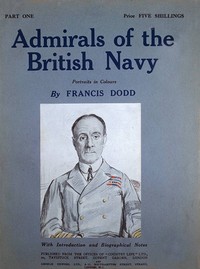
You know how some books feel like a quiet secret you’re keeping? That’s how The Boy Spy stayed with me — that shift between a young man’s thrill and an older man’s sorrow. It made me think of those dignified portraits in Admirals of the British Navy Portraits in Colours with Introductory and Biographical Notes — Context and Discussion, where every face holds a similar weight of remembered duty.
There are no reviews for this eBook.
There are no comments for this eBook.
Reader reflection
How did this book work for you?
Your answers remain private and are stored only in this browser.
Your progress
0
/
10
2
What was your overall reaction to the book?
3
Would you pass this book on to a friend?
4
How easy was the book to follow?
5
How original did the book feel?
6
How did the reading compare with what you expected?
7
What was its emotional impact?
8
Would you like to discuss this book with someone?
9
Which lesson or insight stayed with you?
10