1

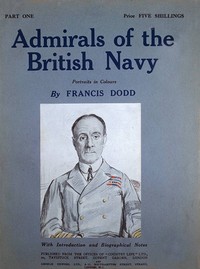
Admirals of the British Navy Portraits in Colours with Introductory and Biographical Notes — Context and Discussion
(0 User reviews)
1396
Project Gutenberg
2012
Not confirmed
World War, 1914-1918 -- Biography; Admirals -- Great Britain
Readers of public-domain and historical texts
Project Gutenberg digital edition
en
Edition facts
Words
16,557
Reading time
72 min
Text sections
3
The catalog record for Admirals of the British Navy Portraits in Colours with Introductory and Biographical Notes — Context and Discussion provides practical reading context through 16,557 words, 1 hr 12 min estimated reading time, and 3 detected text sections.
The text analysis averages about 18.5 words per sentence, while the detected sections provide another way to judge how the source is divided.
Project Gutenberg metadata also associates the work with “World War, 1914-1918 -- Biography,” connecting these edition facts with the source record’s subject description.
Source:
Project Gutenberg record #41399
Francis Dodd's 1917 collection pairs colour portraits of British admirals with biographical notes, opening with an essay on the public's trusting ignorance of the Navy. The prose shifts from reflective generality to terse, fact-laden service records, revealing a tension between myth and documentation.
Editorial Edition Score
4.5/5
★★★★★
★★★★★
Calculated from edition completeness, EPUB availability, text structure and catalogue metadata. Not a user rating.
How this score is calculated
- Description quality20 pts
- Title & short description10 pts
- Source metadata20 pts
- Text length15 pts
- Chapters / structure15 pts
- EPUB file integrity20 pts
Total of 100 points, scaled to a 2.5-5.0 range. Editions with an empty description or a missing EPUB file are not scored.
Edition quality
Public-domain source text
Read the source text
The source text is kept in the dedicated reader, separate from this catalogue record and its commentary.
The introduction to Admirals of the British Navy opens with a striking paradox: the English, normally inquisitive, are singularly incurious about their Navy, substituting faith for examination. Francis Dodd frames this trust as a product of the sea itself—a barrier to investigation that makes the Navy and the ocean one. The prose here is reflective and literary, quoting Matthew Arnold to compare the Navy to Shakespeare: 'Others abide our question, thou art free.' This rhetorical opening establishes a tone of respectful distance before the book pivots sharply into the concrete details of individual careers.
After this general essay, the work becomes a series of biographical notes, each attached to a colour portrait. The language contracts into a factual, almost telegraphic style, recording promotions, campaigns, and honours. The contrast between the introductory meditation and the subsequent entries is the book's most distinctive structural feature.
From General Essay to Individual Record
The book’s two halves speak in different voices. The introduction is a single, continuous argument about national character and the Navy’s silent ubiquity. It uses literary allusion and abstract nouns—'admiration, respect, and, above all, confidence'—to build a collective portrait of the public’s attitude. Then, without transition, the text shifts to the first biography: 'Admiral Sir David Beatty … was born on January 17th, 1871, and entered the “Britannia” in January, 1884.' The sentences become shorter, denser with dates and place names. The reader moves from a world of ideas to a world of facts.
This abrupt change in pace and register is not explained. It suggests that the book’s purpose is twofold: to establish a cultural context of trust, and then to document the individuals who earned that trust through specific actions. The biographies do not refer back to the introduction; they stand as independent records. The effect is that the introduction feels like a prologue spoken by a different narrator, one who steps aside to let the admirals speak through their deeds.
The Language of Service Records
The biographical notes rely on a narrow vocabulary of achievement: 'served,' 'commanded,' 'promoted,' 'mentioned in despatches.' Verbs are active and transitive, and the passive voice appears mainly in the awarding of honours. For Beatty, the text notes that he 'rendered excellent service in getting gunboats over the Cataract' and 'fought the gunboats in front of the enemy batteries with great persistence and success.' The prose avoids interiority; there is no speculation about motives or feelings. Instead, the narrative is built from verifiable milestones: dates of entry, promotion, command, and action.
This style creates a rhythm of accumulation. Each paragraph adds a new campaign or posting, often introduced by a temporal marker: 'During the Egyptian War … In the course of this campaign … When the Boxer outbreak occurred …' The effect is a forward momentum that mirrors a naval career’s progression. The language is efficient, almost bureaucratic, yet it conveys a sense of relentless activity. The reader is given a sequence of events, not a character sketch.
Pace and the Weight of Detail
The pace of the biographies is uneven, shaped by the density of the information. For Beatty, the account of his early career is compressed: his birth, entry into the navy, and lieutenancy are dispatched in two sentences. Then the narrative slows for the Nile campaign, devoting several sentences to the forcing of Dervish batteries and the taking of command after Commander Colville was wounded. The Boxer Rebellion receives even more space, with a detailed description of his attempt to capture two Chinese guns and his being twice wounded. The prose lingers on moments of danger and initiative.
Later entries, such as that of Sir Henry Bradwardine Jackson, follow a similar pattern but with different emphases. The text notes Jackson’s entry into the navy in 1868 and his promotions, but the available excerpt cuts off before any extended action sequence. This suggests that the biographies vary in length and detail according to the subject’s career. The book does not impose a uniform template; instead, it lets the record dictate the pace. The result is a collection that feels less like a reference work and more like a series of individual portraits, each with its own rhythm.
Readers should approach Admirals of the British Navy as two works in one: a reflective essay on naval trust and a set of compressed service records. The biographies reward attention to what they include and omit—the dates, the wounds, the mentions in despatches. The introduction, by contrast, asks why such records matter. Reading the two parts together reveals a book that is as much about the act of recording as about the men recorded.
That rainy afternoon, I lingered over Dodd’s admirals, caught between their painted dignity and the blunt facts of storm and shot. The same odd tension surfaced later, in the unearthed memoir of cavalrymen who wrote their own terse service records—myth fading into mud. So I set the portraits aside for A brief narrative of the Fourth Tennessee Cavalry Regiment, Wheeler's Corps, Army of Tennessee — Context and Discussion, and found the same quiet honesty.
There are no reviews for this eBook.
There are no comments for this eBook.
Reader reflection
Take a moment to reflect on this book
Create a short personal record of your experience with this book.
Your progress
0
/
10
2
What was your overall reaction to the book?
3
Would you recommend this book to another reader?
4
How demanding did the text feel?
5
Would you like to discuss this book with someone?
6
Which aspect of the book did you value most?
7
What did you think about the pace?
8
Did this book create an emotional response?
9
In one sentence, what did you learn?
10