1

The Fleets Behind the Fleet The Work of the Merchant Seamen and Fishermen in the War — A Closer Reading
(0 User reviews)
800
Project Gutenberg
2015
Not confirmed
World War, 1914-1918 -- Naval operations; World War, 1914-1918 -- Naval operations, British; Merchant mariners -- Great Britain
Readers of public-domain and historical texts
Project Gutenberg digital edition
en
Edition facts
Words
25,337
Reading time
111 min
Text sections
3
The catalog record for The Fleets Behind the Fleet The Work of the Merchant Seamen and Fishermen in the War — A Closer Reading provides practical reading context through 25,337 words, 1 hr 51 min estimated reading time, and 3 detected text sections.
The text analysis averages about 21.8 words per sentence, while the detected sections provide another way to judge how the source is divided.
Project Gutenberg metadata also associates the work with “World War, 1914-1918 -- Naval operations,” connecting these edition facts with the source record’s subject description.
Source:
Project Gutenberg record #48305
An editorial note on Dixon's account of WWI merchant seamen and fishermen, focusing on the book's structural contrast between solitary ships and collective effort, recurring images of mines as 'tinned doom,' and movement from praise to instruction.
Editorial Edition Score
4.6/5
★★★★★
★★★★★
Calculated from edition completeness, EPUB availability, text structure and catalogue metadata. Not a user rating.
How this score is calculated
- Description quality20 pts
- Title & short description10 pts
- Source metadata20 pts
- Text length15 pts
- Chapters / structure15 pts
- EPUB file integrity20 pts
Total of 100 points, scaled to a 2.5-5.0 range. Editions with an empty description or a missing EPUB file are not scored.
Edition quality
Public-domain source text
Read the source text
The source text is kept in the dedicated reader, separate from this catalogue record and its commentary.
Dixon opens his foreword with a deliberate refusal to praise, insisting instead that the reader must be instructed. This structural choice sets the book apart from a simple tribute: the merchant seamen and fishermen are already known to be 'peerless,' so the work turns inward, examining the nation's limited vision of its own maritime strength. The prose moves from a collective 'we' to a series of rhetorical questions, building a case for why the full story cannot be written—because the ships are 'solitary wayfarers, scattered units in a waste of waters.' This tension between individual isolation and national dependence shapes the entire narrative.
Solitary Wayfarers and Collective Effort
The book’s structure hinges on a paradox: the merchant service consists of thousands of separate vessels, each acting alone, yet their cumulative work forms the 'fleet behind the fleet.' Dixon emphasizes this by describing the difficulty of recording their deeds—'one record is like another record; one story like another story.' He avoids a chronological battle narrative and instead groups episodes by type of hazard: mines, submarines, weather. This organizational method mirrors the scattered nature of the subject, forcing the reader to see pattern in apparent repetition.
Mines as Recurring Images
Dixon devotes sustained attention to mines, which he calls 'strange sea-beasts with all manner of horns and of bumps.' The imagery is deliberately varied: mines are compared to dilemmas, regrettable incidents, malevolent jests, and tinned doom. One passage notes that mines 'grow like daisies—cut down in the afternoon, they are up again next morning.' This recurring metaphor of organic growth contrasts with the mechanical precision of their laying. The book shifts between technical description and sardonic commentary, as when Dixon observes that drifting mines are blamed on the English by the Germans, 'a rascally people, that cares nothing for the difference between meum and tuum.'
Movement Between Scenes and Scales
The narrative moves rapidly from the North Sea to the Cape, Archangel, the Dardanelles, and the West Indies, creating a sense of global reach. Dixon uses numbers to anchor these shifts: 'more than 1,000 mines have been destroyed by our sweepers' in one area alone, and the British side employs some 1,700 ships and 25,000 men for sweeping. Yet he also zooms in on individual moments—the sleepless watch, the long anxious hours—before pulling back to the scale of the North Sea, which 'alone is greater than Germany.' This constant alternation between the specific and the vast keeps the reader aware of both the human cost and the strategic magnitude.
The Game of Wits
Dixon frames the mine war as an intellectual contest: 'an encounter of wits such as the world will probably never see again upon the chequer-board of the seas.' He describes mines laid to deflect traffic into submarine ambushes, comparing the strategy to chess. The language of calculation—'conceived in the magnificent style, elaborated with curious subtlety'—suggests admiration for the enemy’s ingenuity even as he condemns its purpose. This section of the book is notable for its sustained metaphor of a game, which gives structure to what might otherwise seem random destruction. The reader is left to consider the paradox of a 'rascally' opponent who is also a skilled player.
Readers approaching this text should attend to the way Dixon uses recurring images—mines as daisies, the sea as a chequer-board—to unify a subject that resists conventional narrative. The book is not a history of battles but a meditation on scale, solitude, and the invisible work that sustains visible power. Its value lies less in new facts than in the perspective it offers on how a nation comes to see what has always been before it.
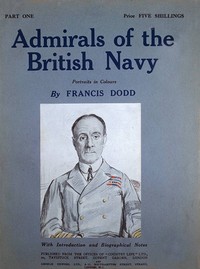
Years after reading Dixon’s account of solitary ships and the awful “tinned doom” of the mines, I found a calmer kinship in Admirals of the British Navy Portraits in Colours with Introductory and Biographical Notes — Context and Discussion — the same sea, but watched from quiet, titled shores, where strategy hums beneath gold braid. Admirals of the British Navy Portraits in Colours with Introductory and Biographical Notes — Context and Discussion sits beside it on my shelf, a composed older sibling to that tense, working memoir.
There are no reviews for this eBook.
There are no comments for this eBook.
Reader reflection
How will you remember this book?
Save your reaction, strongest insight, and memorable passage.
Your progress
0
/
10
2
How much did you enjoy the reading experience?
3
Would you recommend this book to another reader?
4
How much effort did this book require?
5
Did any part of the book stay with you emotionally?
6
Did the story or argument move comfortably?
7
Was the book easy to understand?
8
What did you appreciate most?
9
Which lesson or insight stayed with you?
10